
New coke: an innovation case study
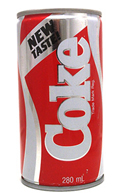 There was a report today of Coke employees selling trade secrets, which reminded me of the New coke saga, a tale of failed innovation.
Most who were around in 1985 recall this as a huge fiasco, where a bad drink was rejected by the public. But the details are much more interesting, as Coke did many things right from an “innovation as strategy” perspective.
What went right:
- Coke chose to move forward in response to real market pressure, rather than defending their existing products.
- They had their best R&D & flavor people design the new product.
- Extensive taste testing and veteran approval were sought, and all pointed to them having a better product.
- They put big $$$ behind a major rollout campaign.
What went wrong:
- The press conference (April ’85) was a disaster. Coke failed to explain why they made the change and did not acknowledge Pepsi taste test, or any taste testing done by Coke in R&D.
- Pepsi attacked with counter-ads, including a full page ad in the New York Times.
- According to Gladwell’s Blink and other sources, the successful taste tests of New coke didn’t suggest people wanted an entire 12 oz. portion of the new formula.
The result:
- There was initial acceptance and the product did well it’s first weeks, sales up 8% compared to previous year.
- However public outrage grew, with groups protesting New Coke (especially strong in the south).
- By June ’85 there was enough public pressure and complaints from bottling suppliers that Coke execs were under pressure.
- In July ’85 Coke brought Classic Coke back to the market.
It’s a great story of the risks of innovation. Coke did many things right – their greatest mistake was underestimating their customers lack of interest in innovation: they were surprisingly happy with how things were.
(See wikipedia’s excellent entry on the New Coke saga).
[Your last Wikipedia link just goes back to your blog]
There’s so many versions of this story; the one that has appealed to me the most has been the difference between “usage” and “meaning.” In the research, they asked people if this new product tasted better. It did. They didn’t ask how people would react if their meaning-laden (meaning that the Coca-Cola company was expert at creating) existing product were to be removed.
Coke knew it was selling something besides taste; they know they are selling “red” (and the intangible it represents), yet it seems they made a decision on the taste (the usage), and NOT the meaning.
Again there are many aspects to this story; that’s just the one that has appealed to me the most.
(Link fixed – thx Steve)
I agree – there are all kinds of interesting angles on what happened.
Of greatest interest to me is how they did many things right, or many things many of the innovation books would say are right, but failed largely for reasons people skip over: misteps in marketing, overwhelming demand for the old, non-innovative product, etc.
Related to software – I wonder if ever people would demand Classic Mac, or Classic Windows. Could you ever have a technology product so entrenched in people’s self identity that any upgrades would create this kind of outrage?
I can think of the Atari 2600 or old Nintendo systems that *still* sell well and have followings today. But most of those people upgraded to other platforms. (The Atari 5200, a failed v2 on the 2600, makes a more obvious case study, as they failed on several basic product quality levels).
“underestimating their customers lack of interest in innovation”
It’s not that Coca Cola’s customers weren’t interested in innovation, its that they weren’t interested in innovation at the expence of the flavor they’d grown to love. I purchase Coke because I like the taste, not because I secretly wished it tasted like something else. That would be stupid.
Bill: that’s part of what I’m after. How can you innovate but not upset previously satisfied customers at the same time? Coke went all in on their bet for new-coke, believing if they just offered “Coke 2” they’d be splitting their brand, and possibly hurting the chances of both products thriving. They did exactly the thing many pro-innovation authors and consultants advise: leave the past behind and move forward.
If you were Coke in 1985, and we getting smacked around by Pepsi, what would you have done?
Another example: every year automobile manufacturers release new versions of their cars, retiring old models. You can’t buy those old models anymore (except used). But no one complains about that – some of those older models had design features better than the current ones.
Or another example: McDonalds Big Mac. It’s changed in many ways over the last 3 decades. They dont go about making big announcements but it’s a radically different product than it was. Is the lesson then to innovate, but do it gradually so people don’t notice so much?
sir,
you are quite right by giving the example of McDonalds in favor of your argument but on the contrary note, i would say comparison between innovation in automobile sector and coke’s innovation as incoherent.
because some up-gradation is very easily visible when we talk about innovation in cars or bikes. But coke never mentioned new coke as a better product than the old coke, instead they just differentiated both of them on the basis of tastes, and placed the new coke superior because its taste was lauded by masses in north and circumvented their own customers from south who liked the old coke.
It is, in my opinion not just the that coke launched this new product with a single sighted biased understanding of consumer behaviour, but the fact that they defended their decision to roll out their product by means of PR, paid or not.
One of the best examples to refute “There is no such thing as bad publicity”
As the primary editor of the Wikipedia article, thanks for the compliment. It is a real pleasure to read someone who doesn’t subscribe to the simplified version of the story that has grown up over the years and appreciates the way this was backed up by actual research.
The Windows ME parallel is interesting; unlike New Coke that was a product I genuinely didn’t like (as soon as I reverted to Win 98, I was able to connect to the Internet again).
I heard subsequent to the fiasco of New Coke that the company was going to switch to high-fructose corn syrup instead of refined sugar as a cost-cutting move and the public was going to notice a taste difference. When the public got their “good old ” soda back, they didn’t (psychologically) notice that (now) “classic” coke had the same recipe change as New Coke.