
Why Smart People Defend Bad Ideas
[First published April 2005]
We all know someone who’s intelligent, but who occasionally defends obviously bad ideas. Why does this happen? How can smart people take up positions that defy any reasonable logic? Having spent many years working with smart people I’ve cataloged many of the ways this happens, and I have advice on what to do about it. I feel qualified to write this essay as I’m a recovering smart person myself and I’ve defended several very bad ideas. So if nothing else this essay serves as a kind of personal therapy session. However, I fully suspect you’ll get more than just entertainment value (“Look, Scott is more stupid than we thought!”) out of what I have to say on this topic.
Success at defending bad ideas
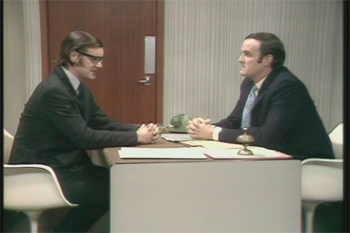 I’m not entirely proud to admit that I have a degree in Logic and Computation from Carnegie Mellon University. Majoring in logic is not the kind of thing that makes people want to talk to you at parties, or read your essays. But one thing I did learn after years of studying advanced logic theory is that proficiency in argument can easily be used to overpower others, even when you are dead wrong. If you learn a few tricks of logic and debate, you can refute the obvious, and defend the ridiculous. If the people you’re arguing with aren’t as comfortable in the tactics of argument, or aren’t as arrogant as you are, they may even give in and agree with you.
The problem with smart people is that they like to be right and sometimes will defend ideas to the death rather than admit they’re wrong. This is bad. Worse, if they got away with it when they were young (say, because they were smarter than their parents, their friends, and their parent’s friends) they’ve probably built an ego around being right, and will therefore defend their perfect record of invented righteousness to the death. Smart people often fall into the trap of preferring to be right even if it’s based in delusion, or results in them, or their loved ones, becoming miserable. (Somewhere in your town there is a row of graves at the cemetery, called smartypants lane, filled with people who were buried at poorly attended funerals, whose headstones say “Well, at least I was right.”)
Until they come face to face with someone who is tenacious enough to dissect their logic, and resilient enough to endure the thinly veiled intellectual abuse they dish out during debate (e.g. “You don’t really think that do you?”or “Well if you knew the <insert obscure reference here> rule/law/corollary you wouldn’t say such things”), they’re never forced to question their ability to defend bad ideas. Opportunities for this are rare: a new boss, a new co-worker, a new spouse. But if their obsessiveness about being right is strong enough, they’ll reject those people out of hand before they question their own biases and self-manipulations. It can be easier for smart people who have a habit of defending bad ideas to change jobs, spouses, or cities rather than honestly examine what is at the core of their psyche (and often, their misery).
Short of obtaining a degree in logic, or studying the nuances of debate, remember this one simple rule for defusing those who are skilled at defending bad ideas: Simply because they cannot be proven wrong, does not make them right. Most of the tricks of logic and debate refute questions and attacks, but fail to establish any true justification for a given idea.
For example, just because you can’t prove that I’m not the king of France reincarnated doesn’t make it so. So when someone tells you “My plan A is the best because no one has explained how it will fail” know that there is a logical gap in this argument. Simply because no one has described how it will fail, doesn’t necessarily make it the best plan. It’s possible than plans B, C, D and E all have the same quality, or that the reason no one has described how A will fail is that no one has had more than 30 seconds to scrutinize the plan. As we’ll discuss later, diffusing bad thinking requires someone (probably you) to construct a healthier framework around the bad thinking that shows it for what it is.
Death by homogeny
 The second stop on our tour of commonly defended bad ideas is the seemingly friendly notion of communal thinking. Just because everyone in the room is smart doesn’t mean that collectively they will arrive at smart ideas. The power of peer pressure is that it works on our psychology, not our intellect. As social animals we are heavily influenced by how the people around us behave, and the quality of our own internal decision making varies widely depending on the environment we currently are in. (e.g. Try to write a haiku poem while standing in an elevator with 15 opera singers screaming 15 different operas, in 15 different languages, in falsetto, directly at you vs. sitting on a bench in a quiet stretch of open woods).
That said, the more homogeneous a group of people are in their thinking, the narrower the range of ideas that the group will openly consider. The more open minded, creative, and courageous a group is, the wider the pool of ideas they’ll be capable of exploring.
Some teams of people look to focus groups, consultancies, and research methods to bring in outside ideas, but this rarely improves the quality of thinking in the group itself. Those outside ideas, however bold or original, are at the mercy of the diversity of thought within the group itself. If the group, as a collective, is only capable of approving B level work, it doesn’t matter how many A level ideas you bring to it. Focus groups or other outside sources of information can not give a team, or its leaders, a soul. A bland homogeneous team of people has no real opinions, because it consists of people with same backgrounds, outlooks, and experiences who will only feel comfortable discussing the safe ideas that fit into those constraints.
If you want your smart people to be as smart as possible, seek a diversity of ideas. Find people with different experiences, opinions, backgrounds, weights, heights, races, facial hair styles, colors, past-times, favorite items of clothing, philosophies, and beliefs. Unify them around the results you want, not the means or approaches they are expected to use. It’s the only way to guarantee that the best ideas from your smartest people will be received openly by the people around them. On your own, avoid homogenous books, films, music, food, sex, media and people. Actually experience life by going to places you don’t usually go, spending time with people you don’t usually spend time with. Be in the moment and be open to it. Until recently in human history, life was much less predictable and we were forced to encounter things not always of our own choosing. We are capable of more interesting and creative lives than our modern cultures often provide for us. If you go out of your way to find diverse experiences it will become impossible for you to miss ideas simply because your homogenous outlook filtered them out.
Thinking at the wrong level
 At any moment on any project there are many levels of decisions. Part of being a smart person is to know which level is the right one to solve a given problem. It’s often at least one level higher than we assume. For example, if you are skidding out of control at 95mph in your broken down Winnebago on an ice covered interstate, when a semi-truck filled with both poorly packaged fireworks and loosely bundled spark plugs slams on its brakes, it’s not the right time to discuss with your passengers where y’all would like to stop for dinner. But as ridiculous as this scenario sounds, it happens all the time.
People worry about the wrong thing at the wrong time and apply their intelligence in ways that doesn’t serve the greater good of whatever they’re trying to achieve. Some call this difference in skill wisdom, in that the wise know what to be thinking about, where as the merely intelligent only know how to think. (The de-emphasis of wisdom is an east vs. west dichotomy: eastern philosophy heavily emphasizes deeper wisdom, where as the post enlightenment west, and perhaps particularly America, heavily emphasizes the intellectual flourishes of intelligence).
In the software industry, the common example of thinking at the wrong level is a team of rock star programmers who can make anything, but don’t really know what to make: so they tend to build whatever things come to mind, never stopping to find someone who might not be adept at writing code, but can see where the value of their programming skills would be best applied. Other examples include people that always worry about money despite how much they have, people who struggle with relationships but invest their energy only in improving their appearance (instead of in therapy or other emotional exploration), or anyone that wants to solve problem X but only ever seems to do things that solve problem Y.
The primary point is that no amount of intelligence can help an individual who is diligently working at the wrong level of the problem. Someone with wisdom has to tap them on the shoulder and say, “Um, hey. The hole you’re digging is very nice, and it is the right size. But you’re in the wrong yard.”
Killed in the long term by short term thinking
 From what we know of evolution it’s clear that we are alive because of our inherited ability to think quickly and respond to change. The survival of living creatures, for most of the history of our planet, has been a short term game. Only if you can out-run your predators, and catch your prey, do you have the luxury of worrying about tomorrow.
It follows then that we tend to be better at worrying about and solving short term issues than long term issues. Even when we recognize an important long term issue that we need to plan for, say protecting natural resources or saving for retirement, we’re all too easily distracted away from those deep thoughts by immediate things like dinner or sex (important things no doubt, but the driving needs in these pursuits, at least for this half of the species, are short term in nature). Once distracted, we rarely return to the long term issues we were drawn away from.
A common justification for abuse of short term thinking is the fake perspective defense. The wise, but less confident guy says “hey are you sure we should be doing this?” And the smart, confident, but less wise guy says “of course. We did this last time, and the time before that, so why shouldn’t we do this again?” This is the fake perspective defense because there’s no reason to believe that 2 points of data (e.g. last time plus the time before that) is sufficient to make claims about the future. People say similar things all the time in defense of the free market economy, democracy, and mating strategies. “Well, it’s gotten us this far, and it’s the best system we have”. Well, maybe. But if you were in that broken down Winnebago up to your ankles in gasoline from a leaking tank, smoking a cigarette in each hand, you could say the same thing.
Put simply, the fact that you’re not dead yet doesn’t mean that the things you’ve done up until now shouldn’t have, by all that is fair in the universe, already killed you. You might just need a few more data points for the law of averages to catch up, and put a permanent end to your short term thinking.
How many data points you need to feel comfortable continuing a behavior is entirely a matter of personal philosophy. The wise and skeptical know that even an infinite number of data points in the past may only have limited bearing on the future. The tricky thing about the future is that it’s different than the past. Our data from the past, no matter how big a pile of data it is, may very well be entirely irrelevant. Some find this lack of predictive ability of the future quite frustrating, while others see it as the primary reason to stick around for a few more years.
Anyway, my point is not that Winnebagos or free market economies are bad. Instead I’m saying that short term bits of data are neither reliable nor a wise way to go about making important long term decisions. Intelligent people do this all the time, and since it’s so commonly accepted as a rule of thumb (last time + the time before that), it’s often accepted in place of actual thinking. Always remember that humans, given our evolution, are very bad at seeing the cumulative effects of behavior, and underestimate how things like compound interest or that one cigarette a day, can in the long term, have surprisingly large impacts despite clearly low short term effects.
How to prevent smart people from defending bad ideas
 I spent my freshman year at a small college in NJ called Drew University. I had a fun time, ingested many tasty alcoholic beverages, and went to lots of great parties (the result of which of course was that I basically failed out and had to move back to Queens with my parents. You see, the truth is that this essay is really a public service announcement paid for by my parents – I was a smart person that did some stupid things). But the reason I mention all this is because I learned a great bit of philosophy from many hours of playing pool in the college student center. The lesson is this: Speed kills. I was never very good at pool, but this one guy there was, and whenever we’d play, he’d watch me miss easy shots because I tried to force them in with authority. I chose speed and power over control, and I usually lost. So like pool, when it comes to defusing smart people who are defending bad ideas, you have to find ways to slow things down.
The reason for this is simple. Smart people, or at least those whose brains have good first gears, use their speed in thought to overpower others. They’ll jump between assumptions quickly, throwing out jargon, bits of logic, or rules of thumb at a rate of fire fast enough to cause most people to become rattled, and give in. When that doesn’t work, the arrogant or the pompous will throw in some belittlement and use whatever snide or manipulative tactics they have at their disposal to further discourage you from dissecting their ideas.
So your best defense starts by breaking an argument down into pieces. When they say “it’s obvious we need to execute plan A now.” You say, “hold on. You’re way ahead of me. For me to follow I need to break this down into pieces.” And without waiting for permission, you should go ahead and do so.
First, nothing is obvious. If it were obvious there would be no need to say so. So your first piece is to establish what isn’t so obvious. What are the assumptions the other guy is glossing over that are worth spending time on? There may be 3 or 4 different valid assumptions that need to be discussed one at a time before any kind of decision can be considered. Take each one in turn, and lay out the basic questions: what problem are we trying to solve? What alternatives to solving it are there? What are the tradeoffs in each alternative? By breaking it down and asking questions you expose more thinking to light, make it possible for others to ask questions, and make it more difficult for anyone to defend a bad idea.
No one can ever take away your right to think things over, especially if the decision at hand is important. If your mind works best in 3rd or 4th gear, find ways to give yourself the time needed to get there. If when you say ” need the afternoon to think this over”, they say
“tough. We’re deciding now”. Ask if the decision is an important one. If they say yes, then you should be completely justified in asking for more time to think it over and ask questions.
Find a sane person people listen to
Some situations require outside help. Instead of taking a person on directly, get a third party that you both respect, and continue the discussion in their presence. This can be a superior, or simply someone smart enough that the other person might possibly concede points to them.
It follows that if your team manager is wise and reasonable, smart people who might ordinarily defend bad ideas will have a hard time doing so. But sadly if your team manager is neither wise nor reasonable, smart, arrogant people may convince others to follow their misguided ways more often than not.
And yet more reasons
I’m sure you have stories of your own follies dealing with smart people defending bad ideas, or where you, yourself, as a smart person, have spent time arguing for things you regretted later. Given the wondrous multitude of ways the universe has granted humans to be smart and dumb at the same time, there are many more reasons why smart people behave in stupid ways. For fun, and as fodder, here’s a few more.
If you have some thoughts on this essay, or some more reasons to add, leave a comment:
- Smart people can follow stupid leaders (seeking praise or promotion)
- Smart people may follow their anger into stupid places
- They may be trained or educated into stupidity
- Smart people can inherit bad ideas from their parents under the guise of tradition
- They may simply want something to be true, that can never be
References
- Check out my related essay, how to detect bullshit.
- This essay was written before I learned about Cognitive Bias, a very important set of discoveries about inherent flaws in human judgement. You should learn about it too.
- Difficult conversations, a book about confronting people in tough situations.
- The argument clinic, Monty Python (If you’ve never seen it, watch it before reading this script. It’s in the 3rd season, disc 9 of the boxed set). Also see the splunge scene in episode 6.
- Games people play, Eric Byrne. A book on transactional analysis: a model for why people behave as they do in certain situations.
- The informed argument, Robert Miller. Textbook style coverage of both proper and unfair argument tactics.
- With good reason, Morris Engel. a short summary of common logic manipulations, explained with a sense of humor (over a dozen cartoons).
- Why smart people can be so stupid, Salon.com
I think it is relatively simple why smart people defend bad ideas. I read two books fairly recently. Neither of these books made much sence alone; however together they led to the following conclusion:
1. We are all brainwashed or have brainwashed ourselves and that is particularily true if one has been brainwashed into a profession. So the first question we must answer is: How brainwashed am I? (Reference – McGinn, Colin 2008, Mindfucking, A Critique of Mental Manipulation, Acumen).
2. What and whose bullshit do I believe? (Reference – Law, Stephen, 2011, Believing Bullshit, How Not to Get Sucked into Intellectual Black Hole, Prometheus Books.
Only after having answered these two questions can one look at issues objectively.
Your comments are very interesting but I find your article a bit to long for me to read it all I would like to comment on myself. I am not smart but I love to be an egghead.I believe in learning and in all the intellectual ideas of the world as history, geography, math, astronomy and especially phillosophy.I suffered thru school not knowing I had a learning disabillity.I have always tried to tackle the toughest branches of learning especially philosophy.I was thrown out of grammar schoo for being a bad kid and also highschool.I received a Ged diploma and went from there to a lot of reading. Most of which I do not understand but I have the need to convince people I am smart.
On the contrary I very easlly admit I am wrong but I find others I talk to unable to do so.I have the bad habit of picking odd unusual things to tell peope. I guess I show people I am smart. For example I might say to someone that american indians never saw a horse until the europians brought them or that syphillis was given to europeans by the native american indians.
These comments inevitally cause arguements. I am not very nice when I have discussions with people and it leads to furious argumentation.
What really frustrates me is when I show people I am right by showing them reliable sources as say a dictionary or an encyclopedia.
So I think I am different in that I am not smart but just like to pretend I am. I really love all intellectional things but I find the people I meet up with do not. Any mispellings or grammatical are do to my poor education. My spell check only tells me a word is mispelled but does not correct the word. Perhaps it does correct the word but I just don’t know how to use it.
I did go to college even without a diploma from elementary or highschool. My major was philosophy. Yup I picked one of the hardest subjects I was a poor student getting c’s and d’s but I passed and I do have a college diploma from FIU here in fla. Of course I never made a nickel from it but I loved it and I am proud that I accompished this. I will go back and read your article in full.
Allan Lazarus.
I love your truths
“your article is a bit to(o) long” and then you respond with an essay before reading all of it? LoL
Allan, you are smarter than you think. Seriously. Next step, keep reading and expanding your knowledge, and focus on reducing your need to defend arguments. When people talk about something you don’t know a lot about (and as mentioned in this article, they might know less than they are leading you to believe!), just relax and ask questions. People who know how to listen and ask questions are truly some of the smartest and best at making decisions.
Just be patient with yourself, and know that a lot of people (myself included) have felt the same way you describe at times. ;-) You are a good, humble individual.
when he is explaining that he was kicked out of grammar school, he mistypes “schoo”. When he mentions that his spell-checker shows him his mistakes, he can’t but explain “I do not know how to use it” to have the checker fix the mistake. Then “Any mispellings or grammatical are do to my poor education” and do is in there to provide evidence of the meaning in that exact sentence. He is smart. He is just saying more than he is explicitly stating in his comment. I can’t put my finger on what it exactly is, but yes, I do think he is smart. Intellectional.
Bill and Scott: Now take this one step further and explain to me the disasters of ENRON and Madoff. How did all the professionals schooled in business and finance not see these coming.
Group think. Same laziness that lead every intelligence agency on earth to conclude that Iraq had W.M.D.
Why do you believe Iraq has chemical weapons, Mr. Spy. Because everyone else says so!
Why do you think Mr. Madoff is a financial wizard Mr. Regulator? Because everyone else says so!
Why do you think ENRON is a good investment Mr. Smug Stockbroker? Because lots of smart guys say so!
To quote a really, really smart guy, Mr. Robert McNamara, “There is light at the end of the tunnel.”
Hughe,
Your thinking is beyond confused, and your writing skills are even worse. Your understanding of science and how it works is as bad as your syntax. I don’t think Scott’s essay wasn’t an invitation to denigrate smart, educated people. Your post is nonsense unless you can prove examples to which you’re referring. What assumptions and what, pray tell, makes you think the big bang theory is rubbish? Your ideas are very poorly formed.
I don’t spend time to review my writings and fix errors on comments.
It took almost entire life for me to gain power of independent thinking in true sense. Even though I hate conventional scientific theories nowadays, I love science and technologies. The problem is to have balanced idea or opinion about a fact one must have different explanations. The great tragic of collective stupidity in human society is educational system is designed to dumb down humans.
If I give you serious scientific papers and books written by scientists and engineers, will you personally spend your spare time and energy to study alternative theory? For example all text books and journals that public can access on the net or buy in book stores only represent theories and information for mainstream science.
Black Holes do exist. Why? As an average Joe like me believe in as truth because the scientists say so.
Matter can not travel faster than the speed of light. Again asking why returns simple answer “Mr. Einstein say so.”
Big Bang theory of universe is absurd and rubbish hypothesis to any individual who really study alternative theories of physics. For instance Big Bang theory assumes our universe is close system that has start and end. How they know our universe is close or open system? To ask this question one has to understand two fundamental approaches for attacking physical problem in sciences: close or open system. Looking at an engine as close system which is completely isolated from external environment probably reasonable. The engine burns fuel and convert part of its energy into mechanical force. Then applying same principal to unimaginably big entity, which is our universe, is simply stupid or intellectual masturbation of bad scientists.
It became scientific fact that Sun’s weather change effects Earth’s local/global weather. I didn’t make this up.
Then, it’s just beginning of bigger reality Earth belongs to. Our solar system travels extremely fast in space. Changing conditions of space also affect every thing in solar system. Then there is our galaxy, galaxy cluster, super galaxy cluster, on and on.
All laws in physics built upon basic assumptions of its inventors. In mathematics it calls as Axiom. Public education do not offer any space to discuss possible or inherited flaws of these Axioms. Whether it’s a kid in a grade school or student in a college, challenging the teacher’ word comes with punishment.
Why do we have to depend on fossil fuels? Because we’ve been taught energy does not exist in empty space. It only exists inside static matter. To extract energy matter – fossil fuel, oil or Uranium or whatever – has to be destroyed. Exact repetition of stupidity when people was believing in “Sun and all stars revolve around the Earth.”
To exercise free will and make own decision one needs to have choices. In science different theories do exist. Do you know who Nicola Tesla was? Nearly seven billions still depend on Tesla’s electric power generation and distribution technologies over one hundred years. Nicola Tesla demonstrated how to extract energy in atmosphere even space, which gave a clue alternative perspective how our universe exists. Anyway good signs more and more people are beginning to embrace Tesla’s perspective.
Hughe,
Your entire post smacks of typical anti-intellectual conspiracy nonsense. As I said, you do not seem to really understand how science works, and your words seem to confirm this. You stated that “For example all text books and journals that public can access on the net or buy in book stores only represent theories and information for mainstream science.” Mainstream science, are you serious here? What, there’s non-mainstream science? Let me get this straight; in other words, there’s a cover up occurring, right? This is such nonsensical thinking. Science is imperfect but it is the best we have, and it is self-correcting because of its peer-reviewed nature. I wholeheartedly reject your conspiracy position as it lacks any basis in reality.
Next, what you appear to be doing is to confuse issues. Simply because someone cannot tell you why matter cannot accelerate past the speed of light does not mean that it is less true. You appear to be attempting to equate one’s faith in science as being the equivalent as one’s faith in religion. If so then you are committing the fallacy of equivocation. I do not doubt that there have been examples of certain scientific theories being initially rejected but proved later. Indeed, vindication for these scientists but it proves that science works. Theories and information are altered as new information arises. Most alternative theories are just that—alternative. Simply because something is alternative doesn’t mean that it’s true. I caution you to be careful as your thinking is bordering on conspiratorial and paranoid…
What is your purpose in life Steve?
this what i and i guess steve are getting at. your to lazy to do the work yet you want to tell us how its done YET when we take the time to refute or rebuttal or debate the topic like an adult somewhat versed in that field yall throw your hands up and say “Whats the point!!!” and knock the metaphorical jenga tower over. if we pursue further (its hardly worth the effort) we look like assholes cause what you guys cant seem to understand is you are wrong and like the author states your stuck in your ways cause you think you are smart…. the cycle.
He sounds like one of those insulters from the article. It’s too bad we can’t always have calm and respectful discussion.
I just don’t don’t know who to respond to but I think this is a great forum. Here are some of my ideas and they are not necessarilly in the order of most important
1 We should try to defend what we don’t believe in.Practice this sincerely and maybe it might improve out prospective.
2 Those who criticize science and those that defend it should realize that scientific theories change over the years as we learn more so why so sure about the big bang theory.
3. I think however that logic never changes. Our measurements of things become more accurate over a period of years due to improving devices however logic of sentences never change. At least I think so.
My sentences may not live up to the above but I try.
4 My theory of science goes something like this. When a new scientific law comes it of course comes from observation and previous know theories but just what makes them accepted as true. Isn’t it a majority opinion among the scientists and philosophers? That is e,g if we deduce that the sun is 90 million miles away isn’t it the majority of opinion that makes it an acceptable scientific law? How many opinions or even observations do we need to determine a scientific rule? A further explanation might go something like this. If we observed a volkswagon car smashed up on every corner we might conclude that they were a poor product but just how many smashed up cars would we need to convince us that the volkswagons were no good One, ten 100, How many scientific observations do we need to present it as an eternal truth?
Ok I know there are many thousand topics to be discussed so lets get on with it
Allan
High I agree with you, I was just searching google for wondering if some one could enlighten me why I consciously and purposely decide to go with bad decisions even after learning what is more correct or the actual thing I’m looking for. Wasting my time and resources anyways, this hit spot on with that and and other answers that I had i reasoned for my decisions I appreciate this article, it made me understand I’m just not only making it difficult for others but myself too.
This essay is describing typical OCD people when they are wrong ;)
I follow what is said here, but my friend tries to use rather large words and speak over me. When i argue back, he just gets mad and starts to call me names or say ” you mad bro”. How do i get out of this situation without creating a fight?
@tim Large words is a self defense mechanism to cause you purposely to over react tell him to use lame se terms or is he scared to be proven wrong.
An excellent article. Scott Berkun gently points out in everyday language some of the most common logical errors. I was also reminded that although I think I’m smart I have bad ideas as often as, or maybe more often than, people of less intelligence, and because I think I’m smart, I tend to hang onto those bad ideas long after they should have been discarded.
The Title of Scott’s essay is “Why Smart People Defend Bad Ideas”. Many here have attacked him for his information on how, not why, they do this. He is discussing ‘smart people’, and why they would defend, support, or propose, and idea or position, that the smart person already knows isn’t smart. I do not see this essay as anti-intellectual , but rather that the intellect needs to be combined with wisdom ( knowledge, experience, understanding, common sense, and insight). I think that the reference to Issac Newton was only to show that smart people, do in fact, defend bad ideas. The only reference to politics was the economy. The fact that some are debating the big bang, relativity, gravity, and science in general, or arguing that if a smart person supports a bad idea, he must not be smart…… only makes Scott’s point. I can not let this go without comment. Steve , theories are not proven. That does not mean that ALL science is theory and therefore , without proof. There is no alternative theory for proven science.
From where I sit there are few things which are more irritating than someone entering into a discussion without fully grasping what’s been said hitherto; indeed, thus enters Jax. Like you, I cannot let your inane commentary go without . . . well . . . commenting. I think perhaps you need to grasp what has been said: we all can defend bad ideas—this I do not deny—but it is usually the ignorant ones who tend to do this. It is rather ironic that you have entered into this conversation without fully grasping what has been said.
Jax, you stated that “[…] theories are not proven.” Oh, really, they’re not? I suppose you’re the type who states that “Evolution is just a theory.” If so then you are guilty of equivocation. You need to understand what science means when it uses the term “theory.” Here’s a little blurb form Wiki: “A scientific theory is a well-substantiated explanation of some aspect of the natural world that is acquired through the scientific method and repeatedly tested and confirmed through observation and experimentation.” It seems to me that you’re using theory in the everyday sense and if so then you are exceptionally wrong. Your last statement is entirely meaningless. What did you mean when you wrote “There is no alternative theory for proven science.” Alternative theory, huh? It is clear to me that you, like most Americans, have little to no understanding of science or the scientific method. Reread the entire post and then get back to us.
You are a perfect example of modern secular humanist thinking, which is 180° wrong.
In 100 years, when our “laws” of physics are shown not at all to be “laws” but to be rules that apply here in earth, in the Milky Way, in this particular time period, but which fall completely apart as soon as we go “out there” (I’m pointing at the sky now) you secular humanists will say, “Well we didn’t have all the data.” But here in this time period, you declare the books pure, unadulterated, proven science. Never responsible for being wrong. Always being right. Nothing but fraud coming out of the intellecutals, scientists, university researchers.
Theories fall well below the laws so no comment needed there.
Someone else posted separating intelligence and wisdom. Yes, a “wise” person is smart. A 180 IQ person doesn’t necessarily have any smarts whatseover. Unfortunately the populace has this predudice against themselves as individuals and they always assume the high IQ and the PhD is smarter than they are, so they keep deferring to these idiots. The reality is the auto mechanic who sees the world knows knows infiintely more than these isolated intellectuals. The results of the “intellectuals” can be seen everywhere – the bankruptcy of the entire free world, graduates who can’t read and write despite the intellectuals taking over the school system from the top down, from the “best” schools in the world, downright idiots in the presidency who couldn’t solve their way out of a wet paper bag.
The infiltration of this secular humanism everywhere has put us in a precarious dystopia. You think we’re advancing greatly but meanwhile the civilization, like many civilizations much greater before us, is flushing itself down the toilet at the lead of the intellectuals.
I’m sure no one in the middle of a dying civilization, knew what they were seeing. Just like you: Completely fogged and spreading the fog to others as you go.
@steve you are of a different kind of inteligence and do not relate to this article so, you feel a certain way and feel to easily dismiss it, this article was meant to inform not prove anything as jax was saying in the comment you quoted he is saying that science is not a theory the universe and science are already a defined system, we all create theories because we are defining a small part of the whole of what we believe to be true.
Ps I didn’t read the whole discussion too much to read I was just trying to understand possible counter arguments and other audiences views on this discussion I may or may not read the rest of it but like this article I’m not trying to prove right or wrong but inform of possible ideas and reasons
Correction: i made a reference to Steve and i meant Hughe, concerning science. I was kind of responding to Steve Thomas with the rest of my comment. My point is that Steve and others are trying to turn this essay (a personally held view of the author) into an argument or debate. It is not about anti-intellectualism, ignorant people, dumb people, left or right, the dumbing down of america, or any of the nonsense posted here, and it all illustrates Scott’s point. Everyone is trying to be right by abandoning the original point and confounding the discussion with points of contention. This essay is about why people, who you know are intelligent, support bad (by any definition) ideas, often against their own best interest.
Steve, i posted a correction to my first post. you have only responded to that part of my comments that was in reference to Hughe. I am not trying to pick a fight and i have read all of the posts here and i know what a theory is.
1
: the analysis of a set of facts in their relation to one another
2
: abstract thought : speculation
3
: the general or abstract principles of a body of fact, a science, or an art
4
a : a belief, policy, or procedure proposed or followed as the basis of action
b : an ideal or hypothetical set of facts, principles, or circumstances —often used in the phrase in theory
5
: a plausible or scientifically acceptable general principle or body of principles offered to explain phenomena
6
a : a hypothesis assumed for the sake of argument or investigation
b : an unproved assumption : conjecture
c : a body of theorems presenting a concise systematic view of a subject
i am interested in this discussion because i have often said that we believe much of what we do because of simply where we were born and raised, and yet smart people, born hemispheres apart, can be just as sure as each other (in their opposite opinions) that they are correct about something without proof. Did that make sense ? Also it bothers me that we use tradition to promote and accept , unacceptable positions. My only contention with you is that you are only illustrating Scott’s point and also that you seem to have made a judgement on my positions and i don’t think that i’ve taken any except with Hughe. i was simply trying to point out what the essay is about. All that nonsense about alternate theories was from Hughe and i was telling him that there is no alternative to the proven truth.
Jax,
I appreciate that much of what you wrote was directed toward Hughe. Yes, I suppose I did take issue with what you wrote. I have been clear: a smart and educated person knows what they don’t know. Given Scott’s hypothesis, how do you know that you’re not merely another person supporting a bad idea? I assure you that I am not in any way illustrating Scott’s point. Do you not see why? I am not making any claim but rather refuting Scott’s point, so it is impossible for me to be illustrating his point.
Moreover, I feel uncertain as to why you felt the need to post all of those definitions about the word “theory.” I am well aware of its meaning but it seems that you are not. For all intent and purpose, scientific theories are facts—at least as close to fact as we can come. Look up the fallacy of equivocation. With that said, this is not meant as a condemnation of Scott; I think he is a great writer and makes a lot of great points, but I vehemently disagree with him on this point. Ergo, I recommend you read carefully what I wrote. I have spent my life debating and thinking carefully about issues and I can tell you unequivocally that it is almost always the loudest and proudest who are certain of their positions; these are usually loudmouthed, poorly educated ignoramuses who spout what they saw on Fox News. One merely needs to debate with a creationist in order to witness my point.
Steve, i know that you’re “pissed off ” and find me “irritating” but check yourself. i have a ‘grasp’ on what has been said. you have not. it is partly my fault because i referenced you instead of Hughe, but if you were that smart you should have been able to figure that out. unless YOU have not read all of the posts, in which case the ‘no grasp’ moniker falls to you. this essay is not about who ‘tends’ to defend bad ideas , but a specific group of people and WHY they defend bad ideas when they should know better. on evolution, i did not offer an opinion and you reveal a lot about yourself in your assumptions. if you read Hughe’s posts you might understand my comments concerning theories. In science, a theory is a rigorously tested statement of general principles that explains observable and recorded aspects of the world. A scientific theory therefore describes a higher level of understanding that ties “facts” together. A scientific theory stands until proven wrong — it is never proven correct. Hughe’s assertion was that “a theory is a theory” and since it remains unproven, stands equal in probability with an alternate theory. Now have you got a grasp ? Tap, Tap, The hole you’re digging is very nice, and it is the right size. But you’ve got the wrong author.
I wondered how long it would take for you to show your nasty side. Here’s what you miss: what I wrote and what Hughe wrote are at different ends of the spectrum.
Steve, one last thing. If you’ve ever been tricked, misled, cheated on, lied to, pranked, suprised, discovered a secret (person,place,or thing), then you don’t know what you don’t know, but when you find out you’ll be wiser.
Yes, why are we arguing? I agree with you. Being smart does not mean one is omnipotent or flawless.
Steve, i knew as soon as you used the term ‘anti-intellectual’ that we were alot closer on issues than you might think. i wanted to see how far this would go. i intentionally did not offer opinion on the issues that were brought up. yes i agree with most of what you have said but am troubled that you do not see how you have illustrated or exemplified Scott’s premise. this essay was not political or derogatory to any group, and only asked and tried to answer a question about a specific group of people. your argument, as i see it , is that everyone (or group) wants to be right and will or has defended bad ideas. maybe, but that is not what this essay is about. My mother is smart. she has a masters and was a teacher for 25 yrs. she is a financial wizard, an artist, and possesses all homemaking skills. when confronted with a new challange she is adapatable and innovative. she is retired now and receives a state teachers pension and SS and medicare. She is in the hospital as i write. She is anti-union, anti-government, pro-corporation. she lives on her Union Pension and SS, gets the best health care between her retirement heath care and medicare, and will probably never recover her stock loses from the bush years (she is 85). Why would she defend the policies from the right so ardently ? Scott nailed it ,
Smart people can follow stupid leaders (seeking praise or promotion)
Smart people may follow their anger into stupid places
They may be trained or educated into stupidity
Smart people can inherit bad ideas from their parents under the guise of tradition
They may simply want something to be true, that can never be.
This is not to say that only smart people do these things or that all smart people do them , but when they do, why ? and how do they defend them ? and how can i debunk them ? that is what this essay is about.
Jax,
Interestingly enough, it sounds like you are describing my own mother—almost perfectly. Admittedly, I do not have much patience any more as I have been at the debating game too long, and I have made many of my own observations about people namely that it so refreshing to read words from someone who is cogent, cautious and thoughtful; these are hardly qualities one sees amongst the ignorant and poorly educated. As such, I do not suffer fools well and can get cranky.
Here is the crux of where I think you and Scott are going wrong: you asked “Why would she defend the policies from the right so ardently ? Scott nailed it , Smart people can follow stupid leaders […].” What then does it mean to be stupid? Such a definition renders the word “smart” as being altogether meaningless. This is exactly why I called this anti-intellectual. We live in an age where people merely rebrand everything. During the Bush years “torture” became “enhanced interrogation” which is, of course, complete excrement. I am sorry but the things you describe are not the habits of a smart person. I do not mean any offense toward your mother or even mine for that matter.
So, I reject your assertion that I am exemplifying Scott’s position because I am not defending a bad idea; I am rejecting one. It troubles me that you don’t see the difference. There is an interesting phenomenon called the Dunning-Kruger Effect which, according to Wikipedia, is “[…] is a cognitive bias wherein unskilled individuals suffer from illusory superiority, mistakenly rating their ability much higher than is accurate. This bias is attributed to a metacognitive inability of the unskilled to recognize their ineptitude.” In short, ignorant people fail to see their ignorance. Indeed, this is a point upon which Socrates himself might have a lot to say.
Here is a great article I recommend to a lot of people :
http://www.nybooks.com/blogs/nyrblog/2012/mar/20/age-of-ignorance/
Steve, i think you just called my mom stupid and me a fool. ok, for arguments sake let’s call smart and stupid, high mental capacity and low mental capacity, respectively. my mom is not stupid, but all of the reasons listed above , for smart people to defend bad ideas, pertain to her, as well as just wanting to be right. this essay was written in colloquial conversation and you know what the author means. you exemplify Scott’s premise by employing every tactic (including belittlement and use of whatever snide or manipulative tactics you have) discussed, trying to be right. it is you who have presented the straw man. this is not an essay defining ‘smart’, but is about a person, having been already defined as smart, defending a bad (stupid) idea (position, stance, law, whatever). you have made assumptions about the author and me that sparked an anger within you. it is unfounded.
Jax,
Neither did I call you nor your mother stupid; in fact, I used my own mother as an example. Even I would never be that rude. I was merely illustrating a point. On a level, I do not disagree that smart people defend bad ideas—it’s part of the human experience—but I do not think it is their “smartness” that has anything to do with the underlying cause. In fact, my overarching issue with Scott’s essay is that he, in my opinion, misuses the word “smart” thereby rendering it meaningless. I know full well what Scott is asserting for part of what he has written about is referred to as “the argument from ignorance.” I too am a university graduate with a philosophy degree, so I know exactly what he’s talking about.
As for me, I take issue with the fact that I have dealt with a horde of stupid religious people who continually state: “Well, prove God doesn’t exist,” or “You can’t prove God doesn’t exist.” I don’t have to! These dolts overlook an obvious point that, before anything else, they can’t prove God does exist. Are these people smart or dumb? Or let’s take the average Fox News viewer—the very group who vote against their own self-interests—are these people smart or dumb? I assert that it’s likely the latter but certainly not always. We all can defend bad ideas—both smart and dumb alike—so, that being the case, we have not really answered the root cause of Scott’s query. In the end, generally speaking, we don’t find that it’s usually the educated or smart people defending bad ideas but rather the opposite. We can go on and on and I do not mean any disrespect to either Scott or you. I simply disagree with this position.
P.S. Yes, I stand corrected on my use of the word “ignorance.” I was using it as a pejorative term. I do agree that Ignorant is not stupid.
Steve, by definition ignorant people can not know of their ignorance. that does not make them stupid. what does that have to do with the price of tea in china ? this essay is still not about defining smart or stupid or ignorance, or the political direction of this country, or religion , or ethics, or any of the BS discussed here, except as they influence people with above average IQs to support and defend bad ideas. If i’ve been rude it is not because you are smart but wrong, but because you poked me first with the rude stick.
Steve, you still don’t get what this essay is about and it makes me question….your reading skills. It is NOT about comparing people or groups of people, or labeling people as smart or stupid, or which group of people act stupid more often than another, or the religious right, or fox news. it is about people that have the intellect to come to correct conclusions about what is true or real, and solve problems, and why they would choose to initiate, support, and/or defend, ideas and positions, that they already know, through their intellect, are not beneficial, moral, ethical, fair, or reasonable. FYI, i googled Scott Berkun and although i may be wrong, he appears to be liberal, probably Dem., and is a regular commentator on MSNBC . You are angry (and i don’t really blame you) and coming across like Sean Hannity, trying to make this about something that it is not. i would rather argue with you than against you if we could stay on topic. i will admit that although i grew up thinking my mom was the smartest person in the world, i have been questioning just how smart she really is , for years. love you mom.
Whilst reading this, I was hoping to email you personally. Unfortunately however, a comments box just doesn’t have the same feel to it, and of course, I am much more reserved on the words I choose to place here – That’s the problem with being famous (by having one best selling book, I think you can deem yourself worthy of some length of fame) Scott, the ordinary person just cannot get hold of you personally.
While already understanding and being knowledgeable about your topic of conversation, I thoroughly enjoyed reading it, and can clearly recall using these tactics during my youth (and I remember both winning and not (however, it’s not necessary to belittle (in my own opinion))). The sole purpose for my comment is to say thank you, for ending a mildly shitty ending to a day with some light reading that lifted my mood.
Side note: I must say however, during the process of writing this, I became very lost in reading the comments, which were truly entertaining. Although while two individuals I read arguments from both sound of intelligence, a debate between each other is much less productive than developing a document of their own speculations and questions to consider.
Jax,
You are tenacious if nothing else. Come on, Sean Hannity, really? I thought I was more like Rush Limbaugh. Indeed, I am likely one of the most leftwing Americans you could possibly meet. However, I know this was meant in the pejorative sense, but simply because I have edges that scratch doesn’t ipso facto make my arguments erroneous. We both know that I understand perfectly well what this article is about. Sadly, you have demonstrated what so many others before have done. You simply either don’t understand what I have written or you ignore what I have written. Did you look up the Dunning-Kruger Effect? My initial charge that this was an anti-intellectual rant is simply for the fact that Scott set the tone when he stated “I feel qualified to write this essay as I’m a recovering smart person myself and I’ve defended several very bad ideas.” And my point on this hasn’t changed: smart people usually recognize when they’ve erred and usually correct their mistakes. It is stupid people who don’t and it is also stupid people who are arrogant and refuse to change their opinion. To argue otherwise is idiotic; thus my reference to the Dunning-Kruger Effect.
Moreover, Scott stated that “if you learn a few tricks of logic and debate, you can refute the obvious, and defend the ridiculous.” Strangely, I can think of a thousand instances wherein stupid people defend really bad ideas, and despite a plethora of evidence to the contrary they will remain steadfast in their position. Indeed, evidence bounces from them like water off of a duck (excuse the exhausted idiom). However, Scott then goes on to refute himself when he states that these “smart people” (who he asserts are really dumb) keep on fooling people “until they come face to face with someone who is tenacious enough to dissect their logic, and resilient enough to endure the thinly veiled intellectual abuse they dish out during debate.” Indeed, this sounds like he means someone who is erudite and has the requisite knowledge to dissect bad ideas. Bullshit is bullshit and no amount of intellectual sleight of hand will change this.
He then goes on to sort of confirm what I am saying when he states that “the wise and skeptical know that even an infinite number of data points in the past may only have limited bearing on the future.” Yes, so true and it is the dumb people who fail to see this. In the end, I am not going to keep going round and round with every newcomer who jumps on this site and wants to take me on. I have said what I have needed to say. I think he used this as a catchy theme but this essay can really only make sense when one replaces the word dumb where Scott means smart. Be well!
P.S. This is not meant as a condemnation of Scott but rather my general frustration with America’s perpetual fliritng with the anti-intellectual.
Steve, if i had anything better to do i would be doing it. i live in the country with no close neighbors or people to talk to, and i find this topic very interesting. two things:
what bad idea are you rejecting ? and… a smart guy is hiking in the woods and comes upon a rushing stream that he wants to cross. he evaluates the situation and deems it risky. he knows that there is a potential for death by drowning. he attempts to cross anyway. has this ever happened ? why ?
none of your posts address this. you keep attacking Scott as being anti-intellectual. even if he is, it is not the subject of this essay. also as you say ” smart people usually recognize when they’ve erred and usually correct their mistakes.” i think that scott explained that , that was exactly what he was doing in writing the essay. another point, i don’t think we are talking about mistakes, but deliberately doing something that you know is a bad idea. i’m sorry but i do not agree with your assessment of this essay. your anger and frustration have lead you down the wrong path to the point that you are arguing politics and social issues with potential allies. probably not a good idea and again an example of what Scott is talking about.
Steve, The Dunning–Kruger effect is a psychological effect in which people don’t realize their level of knowledge on a subject. People who know little about a subject think that they know more than they actually know. People who know a lot about a subject think that they know less than they do. The more you know about a subject, the less you think you know about it. But the more you know about a subject, the better you know how well you know the subject.
you’ll have to tie this all together for me. what are you saying ? this is about specific subjects and doesn’t correlate with an overall IQ. it does explain why dumb or ignorant people might be arrogant and inflexible. it does not address why a smart person would behave this way (defending bad ideas), ignoring their intellect and common sense.
Jax,
Good God you are frustrating! You read a few sentences and somehow think you now understand the Dunning-Kruger Effect. On Wiki, under the section titled “Historical Antecedents” why then do they quote the late, great Bertrand Russell who said “One of the painful things about our time is that those who feel certainty are stupid, and those with any imagination and understanding are filled with doubt and indecision[?]” I mentioned the Dunning-Kruger Effect because smart people aren’t the issue but rather dumb people. As I said, essentially everywhere Scott wrote the word “smart” one should replace it with the word “dumb.”
Religious people are a perfect example of this. Despite overwhelming evidence to the contrary people just keep on believin’ because Jesus is coming back, and those pesky scientists will soon see; how about the 911 conspiracy theorists; how about non-GMO foods, or people who reject immunizations? I suppose all of these people are really smart people. Read Russell’s quote, drink it in, think a moment, and ask yourself why Russell wrote what he wrote.
oh snap ! i just realized (can you be smart but slow ? ) that Steve totally blew me off in his last post ! who do you think you are Wyatt Earp? i may be a newcomer but i came here looking for answers to a social question, not to take down the local quick draw. you’re funny dude, be well also and if your time is so precious, it is probably a bad idea to waste it here.
Steve, first: you can stop responding any time you want.
second: i told you that you would have to tie it all together for me as i didn’t and still don’t get your point (Dunning-Kruger Effect ) as it concerns this essay. i will not repeat this again, this essay is not about dumb (low mental capacity) or ignorant people. i know why they do what they do. and YES they do behave in the same manner. why do YOU do things that are bad ideas ? BTW you never answer questions but change the subject. your main weapon is “If You Can’t Dazzle Them With Brilliance, Baffel Them with Bull Shit” and is yet another tactic described in this essay. you see i know why people like my mom think the way they do, or i’m learning a lot in that direction. an interesting article is at http://mysite.du.edu/~jcalvert/hist/south.htm
and explains the southern myth. it goes hand in hand with a couple of Scott’s answers. Tradition and Wanting to believe that something was different than it really was. Religion is a huge factor. these are people that are not dumb but choose to ignore their own best interest, logic, intellect, and common sense. Why? if i get you right, you are saying these cultured, educated, high IQ, individuals aren’t actually smart.
You’d be an interesting person to have a face to face with. This is not the best way to communicate. We’re simply talking past one another.
Jax,
No, as I have been saying you aren’t getting me at all. I am not saying as you think “if i get you right, you are saying these cultured, educated, high IQ, individuals aren’t actually smart.” No, I am saying they are smart. Do you now concede you’ve missed what I said?
take your time
Steve, look i know you can write a long post. i may not be tenacious enough to stick with you. answers from you are hard to come by but you were pretty quick to point a finger. if they are smart, why do they do what they do ? i’m not very educated so you will have to speak plainly and state your position clearly and i promise i will read it with an open mind. and yes i must have missed something because i don’t have any idea what you are talking about. except that you feel that america is being dumbed down, religion is out of control, stupid people are running things and making bad decisions, and push one bad idea on top of another, and so on… i get that. i am not asking about those things.
BTW we have to hammer this out before monday (or not) cause my new guitar is arriving then and i guaranty i won’t be here.
Jax,
You seem a nice guy. In truth, you have done me a great service. I don’t mean any disrespect but you have made my point much better than I have. Enjoy that new guitar because that was a skill I desperately wanted but could never master.
now the condescension. what are you bailing out ? am i too stupid to bother with ? if you didn’t want to be understood, why did you post in the first place ? i’ll start over. you answer the question. why do smart people defend bad ideas ? if smart people are more aware of their deficient knowlegde on any given subject , why then would they defend an idea in which they knew their knowledge was deficient and had huge stakes at risk? i think that the answer is that there is a personal pay off of some kind. ego, money, social status, religion, tradition, conformism (if that is a word, everybody wants to be seen as the exemplary american and are even intimidated into line) , and what have you. if you read the article i posted you will see that a large part is just wanting things to as you want , not as they are. i think scott nailed it. so just answer one more question, the title of this essay.
Steve, Scott, and anyone who has been following this : I found this site doing a google search using precisely the same question as the title of this essay. I found it to agree with what i have been thinking, and thought it might be useful in practice during conversation at family gatherings. i consider my family to be smart and don’t understand why they think the way they do. we were raised together by the same parents, same schools, same church, many of the same friends, and so on. why am i so different ? and it is troubling because i don’t want to be different. i want to fit in but can not accept biased, bigoted, illogical, superior , holier than thou, attitude of my family. of particular trouble is the fact that i was raised in the deep south.in researching southern antebellum times, is where i started to figure out what was going on. i should say that my saving grace is that i MOVED, to an area with tremendous ethnic and cultural diversity. the confederate ” Lost Cause” and the myth of the old south is a perfect example of how my family thinks. it also fits perfectly with Scott’s premise. so i agree with Scott and thank him for the info on how to deal with them.
I jumped into this thread when i read Steve Thomas’s posts. Although i probably agree with him on most political and social issues, i thought he was doing exactly what Scott was talking about. he started his post with “I seem to be one of the sole dissenting voices here”. that is not a typo. he went directly to belittlement, and superiority . next came an accusation of straw man tactics and he presented his own straw man.next came preaching from authority and name calling. then came anger and dismissal . next came a left field comment about america and a hint at the H-G effect (that i believe to be irrelevant to this discussion) which he refers to later many times. this is all in his first post (or at least one post). somehow he has interpreted this essay as a shot at intellectuals. i decided to try an experiment and try to use scott’s tactics. i’m afraid i did poorly but i don’t think i am wrong. that brings us to what i learned. i have a need to be right, but more than being right , i need to keep the conversation going. i am lonely and bored and think i have an intuitive sense that lets me see through BS and know what is right. i also think that i know what i don’t know, but also realize that unknown is unknown and therefore i am ignorant on many topics and i can and i do, stupid things. However for me, i always try to default to the least risk, when considering any direction. i already knew i had a short temper. so thanks scott, i think having read this , it will help me. Steve we are simpatico on almost everything but this essay, and any who has read these posts, i would really be interested in reading what you might think about it all.
Yes, indeed, you are arguing the typical “Sarah Palinesque” folksy, whimsical, appealing to the “smart” common man. The common sense argument which is more often than not employed as a logical fallacy. Once again, I hold up your post as perfect evidence to my previous points.
Interesting article.
What you describe as a smart person actually is considered an ignorant where I come from.
Unfortunately ignorance is spreading.
Did you realize how fashionable zombie shows have become recently, you see the connection?
Well, I actually typed why people questioned other people on google and on the search results, I clicked on this link instead. And I must say this is a very interesting read.
hey steve, couldn’t stay away i see. it seems that you’ve been at this comment page for three years. talk about tenacious. was that palin remark because i compared your arguing to sean hannity ? the newness of my guitar has worn off so i checked in. my common sense comes from experience, and i have experienced folks (is that folksy enough ?) like you all too often. It doesn’t hurt that i like to read. i have admitted that i have a need to be correct. it makes me feel superior, and while that might be vain, it feels good. i think your need stems from your education. it probably cost a lot, time and money, and you would have been stupid to have obtained it if it wasn’t worth the cost. your experience in debate does not translate to common sense in real situations. that is presumptuous of me, but is my guess. in your first paragraph, in your first post you say..” Okay, let me get this straight; if another person proved a “smart person” wrong by using logic then the other person is a smart person, so how do we know that the other person isn’t simply defending another bad idea. “… we don’t , they might both be wrong, using flawed logic, but that is not the question. i think that to understand each other we should start over. how would you answer the question posed by this essay. without attacking the author or changing the question ? BTW, if anyone is Palinesque, it is you. avoid the question, attack, declare everyone unable to comprehend, change the subject, and patronize. this might be the pot calling the kettle black, but you definitely have a superiority complex.
Jax,
It is a rather curious rhetorical device when we accuse our interlocutors of what we ourselves are guilty. Touché my friend, indeed, I see that you could not stay away either. This is akin to when Fox News refers to other media organizations as being “main stream.” Right-o . . . and the Christian Right is a persecuted minority. You seem to think that we’re talking past one another but it is clear to me that you’re simply not listening.
I have stated and restated my main point. I have simply asserted that in most instances where Scott has written the word “smart” one could replace it with the word “dumb.” In fact, even HongChi noted that “What you describe as a smart person actually is considered an ignorant where I come from.” It seems he is asserting the same thing I have been. I don’t know why this is so difficult to accept, but the beating I have taken over this is interesting. I have admitted that I can be brusque and even apologized to Scott, but this hero worshipping is, in itself, reminiscent of the mentality of the Jesus-camp fodder.
Lastly, the very fact that you, like Sarah Palin and so many of her ilk, like to evoke common sense tells me a lot. Let me be unequivocal here: evoking common sense in an argument is a sure sign of bovine excrement. As I have noted repeatedly, this appeal to common sense is uniquely American and almost always wrong. 800 years ago it was common sense that the sun orbited the earth—even our senses are fooled by this astronomical mirage—but science has since proved common sense wrong. If you want a great example of a smart person defending a bad idea then one need not look any further than Francis Collins who is the director at NIH.
P.S. Here is a good website for you to examine:
http://scienceornot.net/2014/02/06/the-appeal-to-common-sense-garbage-in-the-guise-of-gumption/
P.P.S. Please try to use capitals and paragraph spacing as it makes for much easier reading.
steve, you first invoked “common sense argument”. The term common sense , based on a strict deconstruction of the term, refers to what people in common would agree on: that which they intuit (“sense”) as their common natural understanding. The term is also used to refer to beliefs or propositions that, in the user’s opinion, would in most people’s experience be prudent and of sound judgment, without dependence upon esoteric knowledge, study, or research, but based upon knowledge believed, by the person using the term, to be held by people “in common.” common sense IS sometimes wrong, that is why i read opposing opinions, but i know that the tree in the forest made a sound when it fell even though i wasn’t there. i was simply stating that i do not need to show my credentials ((i.e., I have been at the debating game too long & I have spent my life debating and thinking carefully about issues and I can tell you unequivocally that it is almost always the loudest and proudest who are certain of their positions(could this be you ?); these are usually loudmouthed, poorly educated ignoramuses who spout what they saw on Fox News. & I too am a university graduate with a philosophy degree, so I know exactly what he’s talking about)) to make a point. you can not read about BS and know how it smells. then you throw out the Dunning-Kruger Effect , told me to read about it, and when i did , you said i couldn’t possibly understand it. well aren’t you special. i realize that we are both evidently liberal, and my reference to hannity was only about your style, not content. the palin thing was uncalled for so i felt compelled to send it back to you. yes, i AM back. i have admitted that i enjoy this, but i will not linger for three years on this. i was , and am still , looking for conversation, as i am starved where i live. i get that you reject scott’s premise. i just wanted to hear your explanation, in your own words, as succinctly as possible , as in your version of the essay. if you really want to be understood, that might do it. i don’t type and am obviously poor at sentence construction, but i use spell check and you should be able to read my posts fine. my last question is, if you ” Admittedly, I do not have much patience any more as I have been at the debating game too long,” why are you here ?
Steve,
I have read this entire thread, and I must say your argumentative skills are astounding. I think I’m similar to you, but I don’t posses the in-depth communication skills you have. I need to study those logical fallacies, though I know some. You seem like a guy with whom I could really converse.
steve, the antonym for “smart” is stupid … not intelligent : having or showing a lack of ability to learn and understand things
the antonym for “ignorant” is… informed
both “smart” and “stupid” people can be ignorant, scratch HongChi’s post.
now i’m done with this discussion, unless you actually ask me a question.
however, to change the subject alittle, i would like to say…. you say you are a liberal, yet you are bitter, biased, bigoted, narcissistic, elitist (in your own way), condescending, patronizing, blinded by your own light, and spoiling for a fight (my assumption based on your posts). you blend right in with the picture people like coulter, hannity, and limbaugh, paint of liberals. knock it off ! if you don’t have something constructive to say, shut the hell up. yes you have free speech but i am asking for your co-operation. don’t be like them (radical right). everything is not about left or right, like this essay, so why do you drag all the political BS into it. i am sure smart people on both sides have supported bad ideas. in today’s political environment, can liberals afford all the infighting of the kind going on in the GOP ? if you want to discuss something that does not pertain to this essay, say like, manufacturing in america, i will tell you how to contact me via facebook. i would also like to take this opportunity to apologize for my part in this. i started it with comments intended for hughe but i apologized right away and we should have been able to put that behind us. we are potential allies in the political arena, and it probably not a good idea to piss off your allies. i don’t intend this comment to be mean, or sarcastic, and i will not comment farther unless asked (i’m getting another new guitar so i’ll be away for awhile anyway). peace and no worries brother, jax
Really powerful piece. I’ll definitely be referring to this one multiple times till I’ve extracted all it’s inherent value. LOL, the part on playing pool reminds me of myself as that’s the way I played …
Im definitely of the greater fool variety of person, doing silly things, hating my own writing, disagreeing with myself CONSTANTLY!
But! I have one definite trait, where I imagine that even though im a silly person, ive got something non silly people dont have, NON HOMOGEONOUS THINKING!
Isn’t it great to be truly unique?
Question the Unlogical…. Consider the Implausible
I needed; I found; my experience taught me that finding what I believe is right is as wrong as I can be. Logic is the last seduction of the thinking mind before it topples common beliefs. Logic is simplicity at ground-level.
For what I read, I’m very grateful.
However, always remember that it is necessary to find the right level to solve the problem (I read that somewhere): you may NOT be dealing with a smart person at all. Most people are profoundly shallow thinkers; their thinking is deeply superficial.
Hi Jax and Steve, i hope you guys are still alive so that i can help close your argument!
Steve’s definition of a “dumb/stupid/ignorant person” could perfectly match his interpretation of what the author’s “smart person” definition is.
But Jax thinks that Steve is missing the point of the article an i personally think he is too.
Steve, you’re facing someone YOU believe is a smart person based on your own definition of “smart”.
Is that absolutely/scientifically impossible that the person you define as smart could take a bad decision?
No, it isn’t. Unless you think smart people don’t intentionally take bad decisions.
In theory, the only person i see that wouldn’t take a bad decision would be “Jesus”.
If the smart one could indeed take a bad decision, this article is proposing strategies that could help them change their mind.
It also tries to suggests reasons why they take those decisions.
It’s not about any people taking bad decisions, it’s about people seen as smart by the reader.taking bad decisions.
For fellows like me and Jax who are trying to deal with people we perceive as smart but take bad decisions, the solutions and reasoning related to this problematic are pretty interesting and seem valid.
Maybe you are not interested and the subject and that makes you not read it as it is intended. But if feel that beyond that, you have an strong emotional reaction toward bad decision making and that feeling is taking over, making you unable to understand the purpose of the article.
So much talk about being smart. What iis a good definition of smart? is it an accumulation of facts memorized by contestants on a quiz show as jeopardy I don’t know. Hpw about someone out there give a definition of smart. Maybe this discussion might be interesting.As for myself I am not smart but I have a love for intellectual things.I must appologize for bad spelling and grrammer. I hsve spell check but it only seems to underline my mispelled words
Let me raise up a point. lets suppose we get an Albert Einstein typo fellow whom most of us respect but he decides to plsy a trick on us and very cleverly writes a thesus on a subject but it is all a clever lie. Would any of you on this forum recognize it. Maybe this scenario might lead us to accept an untruth .
Who knows what is going on out there. How many of you have calculated the size of the earh or the distance to the moon and all the other scientific claims out there. After all if the scientific community is claiming truth for its theories then we should act like scientists and check them out.
There have been frauds made by scientist out there. One I recall is the piltown man.I won’t elaborate. Look it up.
I am sure the other scientists check out claims,They will check the claim over and over again. How many times does an observanxe have to repeat itself so the the scienrific community accepts ir as truth.Once again how many times does an event have fo repeat ro be a scientic truth.
Let me begin by saying upfront that this is not an attack on Scott but rather a further elucidation of my initial points. In light of some recent comments, I wanted to comment further. As I have noted, Scott seems to be a nice, smart and resourceful guy, so in no way am I denigrating him or his work. As such, Scott’s article has and continues to generate a lot of interest—which is great. That said, either my initial points were not articulated very well or they were misunderstood—perhaps a little of both. My initial reaction to his article was perhaps a little imprudent because it seemed to be in the vein of American anti-intellectualism. If there are those out there who think anti-intellectualism isn’t a serious problem for our country then there is little I can say to convince you otherwise. Indeed, one need look no further than the notion of “alternative facts.”
Let’s begin by looking at Scott’s opening sentence: “We all know someone who’s intelligent, but who occasionally defends obviously bad ideas.” Firstly, yes, of course we do, but how many of us know obtuse people who defend bad ideas? My guess is that there are abundantly more obtuse people defending bad ideas than smart ones. Secondly, the operative word in this sentence is “obviously” because I think it would be exceedingly rare—certainly not impossible—that a truly smart person would defend an obviously bad idea. On the other hand, let’s consider the number of people who are climate-change deniers, anti-evolutionists, conspiracy theorists, racists, or those who believe that the moon landings were faked. Indeed, the aforementioned are generally not the pursuits of the informed. The rejection of evidence in favor of belief is pure folly—the “prove-it’s-not-true” crowd.
Scott then went on to state that “if you learn a few tricks of logic and debate, you can refute the obvious, and defend the ridiculous,” but then he immediately refutes his own statement by asserting that “if the people you’re arguing with aren’t as comfortable in the tactics of argument, or aren’t as arrogant as you are, they may even give in and agree with you.” What does he mean by the words “as comfortable?” By this does he mean educated in the ways of logic? It seems that after all “smartness” is the key defeating bad ideas and ignorance is the key to accepting them. As the educated know, science is not perfect but it has something quite powerful: it is self-correcting; its findings are falsifiable.
Which brings me to my final point. There is a certain irony in Scott’s article for I contend that he is defending a bad idea here—although, not an obviously bad one. To put it bluntly, I think Scott is guilty of equivocation: indeed, the smart people he describes seem dumb and the dumb ones seem smart thereby rendering either term meaningless. What then does it mean to be smart or dumb? According to Texas State Department of Philosophy, “The fallacy of equivocation occurs when a key term or phrase in an argument is used in an ambiguous way, with one meaning in one portion of the argument and then another meaning in another portion of the argument.” This, to me, is the irony embedded within Scott’s article, and the reason I felt compelled to respond.
Most of your article is good and informative – I came here looking for answers to that very question, not only being admittedly, like you, an intellectual who has ardently defended bad ideas, but also lived around and associated with other smart people who have done the same.
Most of the time, it’s harmless nonsense like “water memory”, but where it gets truly dangerous is where we see well-educated people bring forth authoritarian collectivist ideologies that violate the rights of other human beings – Lenin, Che, Osama bin Laden, Abu Bakr al-Baghdadi – these are/were all very educated individuals who championed vile, murderous ideologies, similarly to the students who brought about the tyrannical reign of Mao in Red China or the Ayatollah in Iran.
This is where “I’m smart, so I can never be wrong” turns into zealous, religious self-righteousness (ironically, even among atheists – see every Communist regime ever), and a person who thinks they can never be wrong on moral/ethical matters is a person who can justify the most monstrous atrocities in the name of some “greater good” (how often do we hear *that* b.s. excuse to infringe someone else’s rights these days?).
Speaking of, as to your sideswipe at “free market economy and democracy”, you know as well as I do that “Well, maybe.” is a weak, lazy argument, and considering the rest of the article, I expected better from you. America’s been around for 240 years and yeah, the “points of data” we have from that timespan, as compared to our chief competitors in nations suffering under Marxism or Sharia law show that our way of civilization is objectively, demonstratably superior. I don’t say this out of baseless chauvinism for Western Civilization either – look up “nations by quality of life” if you don’t believe me. Or better yet, look at where people are migrating en masse to and where they’re getting the hell out of. Hmm, I wonder if there’s a *reason* why America is still the #1 destination for immigrants like myself?
His remedy closely approximates a process I’m aware of called “problems of comparable magnitude” which I think is better used for when there are those who think they have insoluble problems.
Asking someone “what problem will that create? Oh yeah? Well what problem will that create.. or openly inviting them in using step by step scientific method in conversation etc to a problem someone has gets the creative gears spinning and they will become less stubborn and maybe find new solutions with their creativity rehabilitated.
But It’s the lessening of stubbornness in covertly asserting ones right to openly speak logically using any sort of problem solving I find will not work in the long run. This will only produce ignorance in someone which will probably provoke more defense of wrongnesses in the future I find.
I don’t have a College degree but what I think is missing from this essay is that spiritual beings cannot sometimes admit they are wrong. It’s their only survival. It’s their last line defense (depending on their integrity as a being.)
The best remedy to handle someone who keeps doing something the wrong way or defending bad ideas is to rehabilitate their ability to be right.
But using this reference
http://www.iapsop.com/archive/materials/ability/ability_153_sep_1963.pdf
You simply ask “what is right about (wrongness)?” Gently enough and often enough and they will cease completely in their defense of wrongnesses.
If you like that article you will like the one I linked.
Intriguing topic, thank you. But you might have overlooked the following important reason smart peaple defend bad ideas: maybe thet are – sometimes – not capable of having better ideas. So, it is not just that they defend them, they also “have” bad ideas.
You consider the limits of our evolved brains, but you do not discuss the inherent complexity of many of the things smart people want to have an idea about (the nature of the universe and consciousness may be prototypical examples). It is not only the problem of short sightedness and an inability to think long term, it is not only the future that is hard to predict, but it are many aspects of current and past reality as well that are hard to grasp. So it is a more general problem, of which the inability to think long term is just one case.
So, if some aspect of reality is hard to grasp, why just not say “I have no idea”, rather than formulating a bad idea? Well, never a horse couldn’t be rode, never a rider couldn’t be throwed.
Just read article and it made a lot of sense to me. Have had a terrible time with someone who was quite smart and also had an ego. We had fundamental differences of opinion within a group and I was undermined and ridiculed. His ideas were flawed. I’ve finally proven his long held opinion was wrong but it will now take a miracle for the group to change direction. I’ve learned a lot, mainly about human behaviour and how to avoid those with big egos.
The only option was for me to leave the group and I don’t know if they with have the strength stand up to the person, even though some have admitted that things need to change.
Great piece Scott.
I was doing some research and stumbledupon your post.
Thank you for taking the time to share your thoughts.
Reading Hegel and going through a lot of history books I have found that “financial reasons” play an important role in smart people defending bad ideas.
Actually history books are full of extremely smart people that supported some extremely dumb ideas and if you dig deeper into those smart individuals you will find that “ECONOMICS of $$” played an important role.
Thank you
Azi
I’m pretty sure there’s a confusion here… between what being smart is and what being clever is.